India's T20 Revolution: The Leagues Building Cricket's Next Era
India's T20 economy now extends far beyond the IPL. State leagues are creating players, audiences and businesses that are reshaping the domestic system.
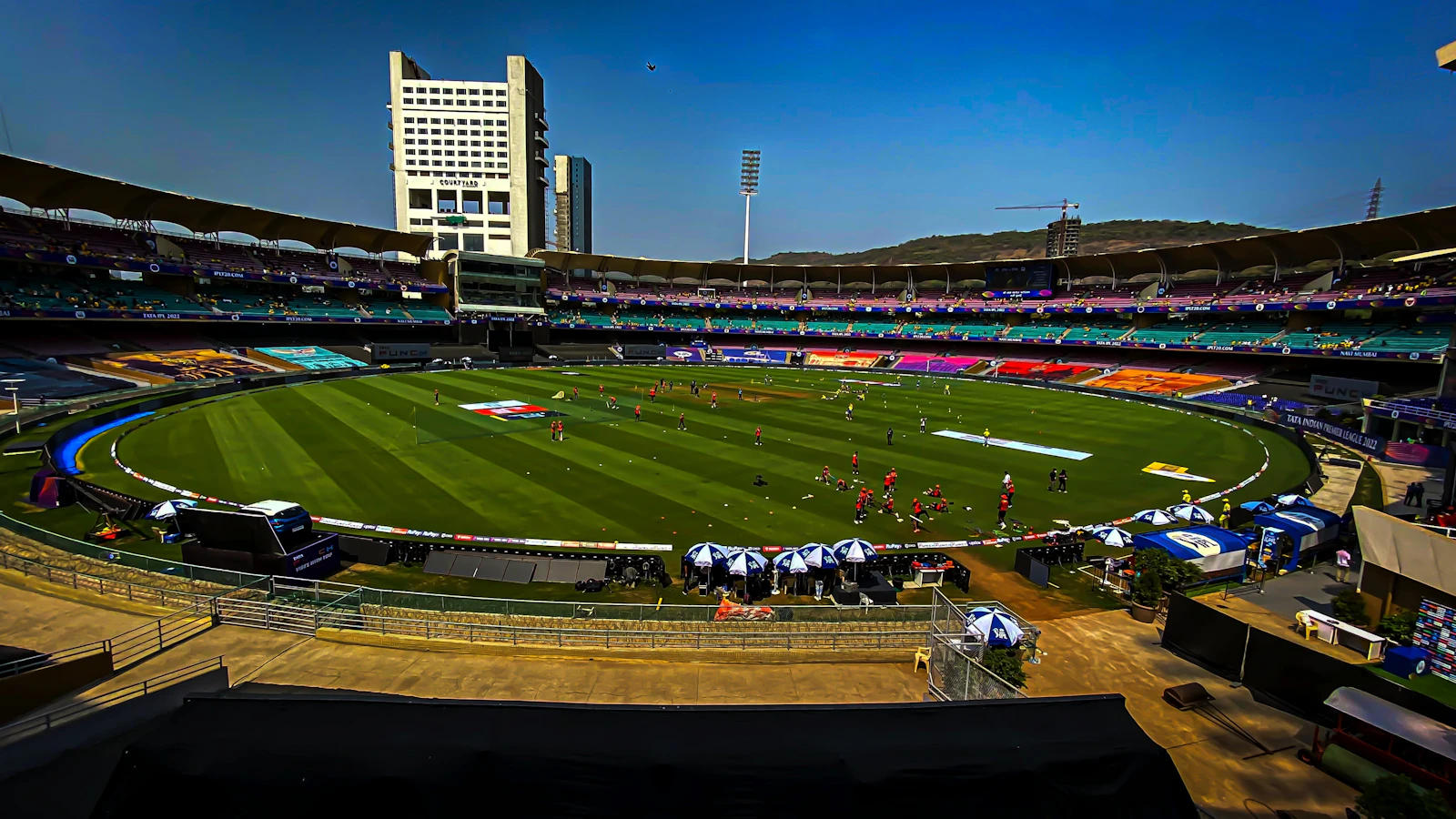
The Indian Premier League is now a multibillion-dollar industry. In 2026 it was valued at roughly $20 billion, with a recent media-rights deal of ₹48,390 crore for 2023-27. That scale has changed Indian cricket.
For a long time, the IPL was an island — a single, massive tournament each year. Today a whole ecosystem of domestic T20 leagues is flourishing beneath it. Nearly every major state has launched its own franchise T20 league. These competitions aim to achieve two things at once: unearth new IPL-level talent, and become viable businesses in their own right.
The headline: India's cricket calendar is busier than ever, and not just because of more ICC events. The BCCI traditionally funded domestic cricket, but now state associations are treating T20 tournaments as properties. They sell team franchises, sign sponsors, invite broadcasters, sell tickets, and even develop merchandise. This isn't charity cricket. It is an emerging market.
The IPL created the demand
The math is simple. Ten IPL franchises need dozens of good Indian players — openers, finishers, spinners, pacers, all-rounders. Each squad has roughly 25 slots, and the Impact Player rule pushes teams to deepen their benches further. In 2024, Indian players filled about 66% of IPL XI slots, up from 64.7% in 2023. Across the season, IPL teams used more than 1,200 domestic slots.
The traditional pipeline was: local club → state academy → Ranji Trophy → India. Now there is a new rung. A young player can break out through a state T20 league and leapfrog straight to the IPL, sometimes before playing first-class cricket. It works like a farm system — local T20 shows feed directly into the top league.
The scouting layer: Syed Mushtaq Ali Trophy
Before state leagues, Indian cricket had one domestic T20 tournament: the Syed Mushtaq Ali Trophy (SMAT). It features all 38 state teams in a big round-robin, and has become a critical scouting ground. But SMAT still lives inside the traditional BCCI model — entry is not ticketed, and it runs on broadcast rights and BCCI funding rather than being sold as a commercial property.
The SMAT numbers make the T20 shift undeniable. The tournament-wide strike rate jumped from 116.9 in 2022 to 135.5 in 2024, and in 2024 alone it produced 37 individual scores of 200-plus. India's domestic batsmen are hitting harder than they ever have. SMAT surfaced the trend; the state leagues built a market around it.
States go franchise: the rise of regional T20 leagues
Starting in the mid-2010s, state associations began launching their own franchise T20 leagues, inspired by the IPL model but focused on regional talent and regional fans. The idea is simple: build a mini-IPL in every state. The lineup that has emerged:
- Tamil Nadu Premier League (TNPL) — started 2016 with 8 city teams. The inaugural auction sold franchises for a combined ₹33.51 crore (highest single team ₹5.21cr). Ten seasons in, TNPL is still one of the strongest producers of IPL talent — Sai Sudharsan, Washington Sundar, Varun Chakravarthy and Shahrukh Khan all debuted through it.
- T20 Mumbai League — launched 2018. The 2026 season reached 3.8 billion watch-minutes on TV and digital, with over 65 million unique TV viewers (up 61% year-over-year), and generated more than ₹1 crore in ticket sales alone. Big names like Suryakumar Yadav, Shivam Dube and Shreyas Iyer play in it; Dube's five-sixes-in-an-over launched his career here in 2018.
- Delhi Premier League — inaugural season 2024. Six men's franchises sold for a combined ₹49.65 crore, matches at Arun Jaitley Stadium, and Rishabh Pant drafted alongside a full women's competition of four teams.
- UP T20 League — began 2023. Owned by the Kings XI Punjab group. Produced Sameer Rizvi, who scored 104 in a UPT20 game and was picked in the IPL soon after.
- Kerala Cricket League (KCL) — debuted 2024 with six city teams. Auctions in the ₹1-2.5 crore bracket per franchise. Vignesh Puthur was scouted through Kerala's system before making waves in IPL trials.
- Maharashtra Premier League — started 2023 with six teams, focused on the rest of Maharashtra (Pune, Nagpur) outside the Mumbai League's remit.
- Jharkhand T20 League — launched 2026 with six teams covering Ranchi, Dhanbad and other Jharkhand cities. The 2026 auction saw Ishan Kishan's local franchise go for ₹14.7 lakh, and the league secured a three-year JioHotstar broadcast deal from day one.
- Madhya Pradesh T20 League — started 2024 in Gwalior, grown to 10 teams by 2026. Top players go for ₹10-15 lakh (e.g. Ashutosh Sharma at ₹15L). The trophy is called the Scindia Cup.
- Andhra Premier League — only in planning by 2026, but a smart precursor: APCRDA gathered 35,000-40,000 fans across venues in 2025 by keeping entry free before switching to a paid model in the launch season.
Each league leans into local flavour. Team names, city rivalries, local sponsors and young captains make them relatable. Most use existing BCCI venues (TNPL at Chepauk's practice grounds, DPL at Feroz Shah Kotla, KCL in Kochi and Thiruvananthapuram) rather than building new stadiums. Broadcast partners vary — TNPL runs on Sony and YouTube, Mumbai on JioHotstar, Jharkhand also locked in JioHotstar, others stream via YouTube or regional channels. Production quality is climbing every season; some leagues now use professional production companies and drone coverage to hit a TV-broadcast feel.
Money on the table: franchise fees and sponsors
These are not toy tournaments. Franchise rights are being sold for crores. TNPL's 2016 auction fetched ₹33.5 crore across eight teams. DPL's six franchises went for ₹49.65 crore combined. Even individual player prices have climbed — MPL's first auction saw Ashutosh Sharma go for ₹15 lakh, and stars like Ajinkya Rahane and Suryakumar Yadav have featured in Mumbai League squads.
Sponsors are lining up. TNPL's title has passed through several brands (currently Shriram Capital) with names like Surf Excel and Abhibus on jerseys. T20 Mumbai's commercial partner is Nuvama, and the league carries a healthy roster of team and venue sponsors. Broadcasters and OTT platforms want year-round content — JioHotstar has picked up both Jharkhand and Mumbai. Ticketing has moved from an afterthought to a real revenue line: T20 Mumbai crossed ₹1 crore in 2026, with the final alone accounting for ₹51 lakh. Even smaller leagues report five-figure gate receipts per match.
The key is local identity. Supporters buy jerseys and tickets for their regional team, not just for a big-city brand. When Mumbai's North Mumbai City franchise offered a double-decker bus season pass, it sold out — a first in Indian domestic cricket.
Talent pipeline in action
The "next Shivam Dube" is what these leagues hope for. And it is happening.
In the 2018 T20 Mumbai League, Dube's 18-ball 68 with five sixes made headlines; the IPL scouts were watching, and India followed soon after. Sai Sudharsan's heroics in TNPL earned him an IPL contract. Washington Sundar and Varun Chakravarthy both used TNPL as the platform for their IPL and India careers. Priyansh Arya scored 602 runs in the 2024 Delhi Premier League and then debuted for Punjab Kings in IPL 2025 with a 103 not out. Sameer Rizvi's league form in UP forced him into the 2024 IPL auction. In Madhya Pradesh, uncapped players like Aniket Verma and Akshat Raghuvanshi have already seen their auction prices jump to ₹10-14 lakh within a single season.
BCCI selectors now track league stats. Every named player's page on Cricket+ integrates their league form — form charts, phase splits and venue records that used to live in a scout's notebook are now one tap away. Scouts have effectively multiplied: instead of watching five Ranji games to judge a young batter, they can follow 30 league games per player.
Five streams of revenue
The leagues that work are the ones that balance multiple income lines:
- Franchise fees. One-time sale or long-term lease of team rights. DPL charged ₹8-8.95 crore per team; TNPL's initial bids ranged ₹3.3-5.2 crore. Some franchises are backed by deep-pocketed owners with international-league experience.
- Sponsorship and branding. Title sponsors (Shriram for TNPL, Nuvama for Mumbai) alongside team and outfield sponsors. TNPL's 2026 sponsor roster includes Abhibus, Surf Excel Matic and KEI Wires.
- Media rights. Smaller than the IPL's, but growing. Jharkhand signed a three-year JioHotstar deal upfront for 2026-28. Delhi streams on local TV and YouTube. These deals often cover production costs plus a small association fee.
- Tickets and venues. T20 Mumbai's ₹1 crore in gate revenue is now the benchmark. DPL finals fill Arun Jaitley Stadium. Season passes and box seats are opening a second layer of ticket income.
- Merch and licensing. Still nascent. Official jerseys, caps and online content are the first steps; a few franchises are experimenting with e-commerce. Fan engagement metrics are climbing too — Nuvama's Mumbai league reported 158 million social impressions in 2026.
These streams add up to a small-scale version of IPL economics. And franchise equity values are rising. A Kolkata bidder took a TNPL team in 2024 for ₹2.07 crore, up from ₹1.7 crore in 2018. Mumbai and Tamil Nadu are approaching break-even; others are still climbing.
Infrastructure and operations
State associations lean on existing BCCI infrastructure. Most leagues run at established domestic venues — Chepauk's practice grounds for TNPL, Feroz Shah Kotla for DPL, Kochi and Thiruvananthapuram for KCL. Few purpose-built stadiums; local academies and auditoriums are upgraded with better lighting and broadcast facilities instead.
Broadcast production is professionalising. Mumbai's league now runs multiple camera angles and live graphics. TNPL was an early pioneer of live-streaming Indian domestic T20. DPL uses professional production partners to hit TV-quality output. The main cost pressure: unlike the IPL, state leagues still rely on sponsorship and association funds to underwrite production.
Staffing has grown alongside. Franchises now hire CEOs, coaches and marketing teams. DPL brought in ex-IAS Bimal Julka as chairman with a professional marketing bench underneath — an institutional approach that is new to Indian domestic cricket.
The emerging economy and its challenges
This boom creates value across the country. Local businesses sponsor teams. Broadcasters fill calendars outside the IPL window. Young players in every corner of India now have professional contracts worth lakhs, not just Ranji match fees. The wider sports-services sector benefits too — jersey manufacturers, camera crews, hotels, ground staff during match weeks.
Sustainability is not guaranteed. Scale is the challenge. The IPL's multi-thousand-crore economy dwarfs every state league, and ESPN's analysis has warned that many regional leagues are still short of profitability. Franchises sometimes depend on owner wealth rather than league revenue. Sponsors can overextend expecting IPL-scale returns. Calendar congestion is the other pressure: India's domestic season already ran to 1,788 matches in 2025-26 before you count the local leagues. Fan attention has a limit.
The leagues that have adapted best have made a few clear choices. TNPL runs with a low association fee and lets teams earn their own sponsorships. T20 Mumbai built a robust ticketed model from the start. Andhra's free-entry growth strategy recognised that some markets need time to build loyalty before they will pay. The common thread: understand your market. A Chennai fan will turn up for TNPL; a Vijayawada fan may need a season or two before they will pay to attend.
Outlook: a new layer beneath the IPL
Will every league thrive? Probably not. The next few seasons will see consolidation — fewer teams in some formats, mergers between adjacent state leagues, and a few tournaments folding. But the broader transformation is clear.
India is building a deep pyramid. At the top sits a global sport behemoth in the IPL. Beneath it, dozens of smaller leagues are turning cricket into a year-round entertainment industry. The ecosystem now supports not just stars, but also coaches, umpires, ground staff and content creators across dozens of tournaments.
For the national team, this is a strong positive. More competitive T20 exposure means more match-ready players. And the commercial case keeps expanding. Sports in India remains one of the country's clearest growth engines, and the state leagues are the next chapter after the IPL.
The biggest question is no longer "can these leagues succeed?" — it is what happens if they do. What if India soon has 50 domestic players good enough for T20 internationals but only 20 slots in the IPL? Will franchises lift their overseas cap? Will a global league bid for these talents? Will Indian state leagues start forging alliances beyond India?
What is certain is this: ten years after the IPL taught India to love T20, the country's cricket future now rests on a much broader foundation. That foundation is being built by these dozens of smaller but rapidly growing T20 leagues. How high the pyramid rises — and how deep it digs — will shape Indian and global cricket for a generation.
The live calendar of every one of these tournaments — IPL, TNPL, DPL, Mumbai, Jharkhand and the rest — sits on the Cricket+ scores page with the ball-by-ball view attached.
Frequently asked questions
How many domestic T20 leagues are there in India? By 2026, nearly every major state has launched a franchise T20 league. Notable ones include the Tamil Nadu Premier League, T20 Mumbai League, Delhi Premier League, UP T20 League, Kerala Cricket League, Jharkhand T20, Maharashtra Premier League and Madhya Pradesh T20.
How do these state leagues make money? Revenue comes from multiple streams: franchise sale fees (often ₹3-15+ crore per team in auctions), title and team sponsorships, broadcast and streaming rights, ticket sales, and merchandise. T20 Mumbai crossed ₹1 crore in ticket sales in 2026, and TNPL's initial franchise auction alone fetched ₹33.5 crore.
Who are the players who broke through via these leagues? Several Indian internationals started via state T20s. Shivam Dube made his name in the first T20 Mumbai League (five sixes in an over). Sai Sudharsan, Washington Sundar, Varun Chakravarthy, R Sai Kishore and Shahrukh Khan were TNPL alumni. Priyansh Arya impressed in the Delhi League before scoring an IPL century for Punjab Kings. Sameer Rizvi starred in UP's league before his IPL move.
How significant are viewership and attendance numbers? Growing fast. In 2026, the Mumbai League reached 65 million TV viewers and 3.8 billion watch-minutes. Finals can fill large stadia — T20 Mumbai's final drew 32,000 fans. Still fractions of the IPL, but the regional engagement is real.
Are these leagues competing with the IPL? Not directly. Organisers frame it as complement, not competition. The IPL season is untouchable; state leagues fill the other parts of the year and other niches. As one league chairman put it: "Our job is not to compete with the IPL. It is to create the next layer below it."